
Journée scientifique francophone internationale 2026
The complexity of suffering in palliative and end-of-life care
At a time when palliative and end-of-life care (PELC) is undergoing profound medical, social and ethical changes, suffering remains a central issue, but one that is still insufficiently explored in all its complexity. Long focused on physical pain, the term suffering is gradually opening up to a broader understanding: psychological, social, moral, spiritual and existential, cultural, anticipated, linked to the trajectories of illness or end-of-life and the lived realities of people, their loved ones and caregivers. Studies and debates around palliative care and aid in dying (medical aid in dying in Quebec) have brought to light the importance and specificity of suffering in hospice palliative care situations.
In this context, research has a fundamental role to play: not only to produce knowledge, but also to question its own methods, its blind spots, and the forms of collaboration it establishes. This scientific day aims to foster disciplinary cross-fertilization, to bring researchers∙ses, practitioners, carers, cared-for people and loved ones into dialogue, and to value sensitive, situated, collaborative approaches.
Suffering and comfort at the end of life: ethical issues and uses of neurophysiological assessment
Chloé PROD'HOMME
METRICS ULR 2694, Université de Lille
Suffering can become invisible when the person is no longer able to express it, due to neurological failure, the final phase or sedative practice. In such cases, assessment is reduced to the subjective impression of comfort - an ambiguous and variable concept - by healthcare professionals or relatives.
We hypothesize that adding monitoring of the parasympathetic nervous system may improve comfort assessment of non-communicative people in palliative care (PC). The Analgesia Nociception Index (ANI) measures parasympathetic activity through heart rate variability. This index decreases during stress or acute pain.
Can "physiological comfort" make sense close to death? This presentation will explore the relevance and uses of ANI in MS, through the results of a mixed study.
A prospective, observational phase compares ANI measurement with the Critical-Care Observation Tool (CPOT) behavioral pain observation scale conducted by blinded nurses before, during and after painful care in 20 MS inpatients. ANI is effective in detecting procedural pain. Then, 28 interviews with professionals and relatives of patients monitored by the ANI in routine practice were analyzed by thematic reflexive analysis. Two types of use were found: one medical to better assess discomfort, the other "relational", invisible to caregivers, where the variation of ANI during speech or touch by relatives offers valuable recognition of their accompaniment.
Finally, clinical ethics sessions bringing together researchers, relatives and MS professionals with or without experience of using the ANI merged these findings, led to research perspectives for the deployment of the tool in MS and proposed avenues for a new design more suited to these contexts.
Conflicting ends of life in CHSLDs: suffering and divergent caregiver moralities
Alizée LAJEUNESSE
Department of Anthropology, Université de Montréal
This study examined the anthropological suffering of staff members, residents and families in residential and long-term care centers (CHSLDs) in Quebec. In these settings, actors are continually confronted with complex and divisive end-of-life ethical situations.
This presentation aims to deepen understanding of the diversity of experiences of one of the forms of this everyday anthropological suffering, as recounted by caregivers: moral suffering experienced in the liminal space between living and dying.
A long-term ethnography that combined participant observation on nine care units, and interviews with 34 actors in CHSLDs from 2024 to 2025 showed that this suffering was intimately linked to relational and organizational issues experienced by employees.
The data from this research show that when the divergent moralities mobilized to negotiate ethical dilemmas collide, they go so far as to fragment teams, which are then caught in conflicting moral worlds between palliative and long-term care trajectories. An ethnographic vignette will specifically illustrate a gray area of medical aid in dying encountered in CHSLDs, where values and decisions collided for caregivers with diverse professional roles and socio-cultural contexts.
In this highly emotionally and identity-charged setting, caregivers tend to rely on plural definitions of others' perceived suffering, dignity, the duty to care, but also of what constitutes good care, as well as good or bad life and death. Experienced moral suffering is then inscribed in a space of ambiguity, polysemy and care sophisms, a polarizing in-between space where one suffers the suffering of the other, where the perceived suffering of others can become suffering for oneself.
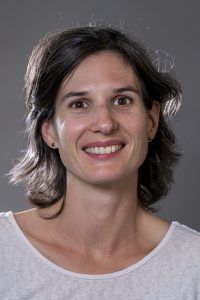
Chloé PROD'HOMME is Maître de conférences des universités, praticienne hospitalière en médecine palliative à Lille. Her doctoral research focuses on the evaluation of invisible suffering, through the concept of "parasympathetic comfort" at the end of life. She questions the use of electrophysiological devices in palliative care units and their repercussions on support for relatives and family carers. Her methodologies are mainly qualitative and mixed.

Medical anthropologist and doctoral student in the Department of Anthropology at the Université de Montréal, Alizée LAJEUNESSE conducts research on sociocultural and ethical aspects of long-term and palliative care. She is conducting a Quebec ethnography of residential and long-term care centers and seniors' homes on the lived experiences of caregivers, residents and family members. Her work focuses on the organizational, relational and moral issues shaping the dynamics, practices and dilemmas between life and the end of life. She is also an applied research professional on aging at the Faculty of Nursing and the Centre de recherche du Centre hospitalier de l'Université de Montréal, and teaches occasionally in the Anthropology Department.
When suffering goes under the radar: evaluating the detection of psychological distress and needs in oncology
Sébastien SIMARD
Health Psychology Research Team, Université du Québec à Chicoutimi (UQAC)
In Canada, psychological distress is recognized as the 6ᵉ vital sign in oncology, requiring systematic assessment throughout the care trajectory. With this in mind, the Distress Detection Tool (DDT) has gradually been integrated into clinical practice. However, few studies have evaluated the quality of its implementation and use.
The aims of this study were:
1) To evaluate and document the use of the DDT in a regional hospital center in Quebec
2) To explore the perceptions of patients and oncology professionals regarding its use.
A mixed-methods study was conducted. All records of patients who received radiotherapy between January 1, 2017 and December 31, 2021 (N=4517) were consulted to check for the presence of an SDO, extract available data and document management. Individual interviews were conducted with patients (n=8), nurse navigators (n=8) and radiotherapy technologists (n=7) to explore their perceptions of psychological distress, the detection procedure and the advantages and disadvantages of distress detection.
About 45% of patients did not complete the ODD. Of these, 64.7% were deemed ineligible by professionals, and 35.3% refused to complete it. In addition, 21.5% of completed ODDs were partially or incorrectly completed. Contrary to the recommendations, the management of distress was mainly based on the declaration of a need for help. Interviews confirmed the importance attached to suffering and revealed several shortcomings in detection: unclear instructions, lack of training and support, as well as insufficient follow-up.
This study highlights the need for ongoing evaluation of clinical practices to improve identification of psychological suffering and support oncology professionals.
Exploring the concept of total pain in contemporary palliative oncology care: a qualitative study of patient resources
Maya CORMAN
LAPSCO, Université Clermont Auvergne
According to the concept of total pain proposed by Cicely Saunders (1967), pain management in patients requiring palliative care requires consideration of its multidimensional nature, encompassing physical, social, psychological and spiritual aspects. The aim of this study was to update the concept of total pain and explore the resources used by cancer patients.
Fourteen semi-structured interviews were conducted in an oncology center and an oncology rehabilitation center (median age = 70.5 years, 55-77 years; 8 women). The interview guide explored different dimensions of suffering, including physical (e.g., pain), social (e.g., isolation), psychological (e.g., emotional state) and spiritual (e.g., the role of spirituality in the experience of illness), as well as links with the nature and patients' internal and external resources associated with each sphere of suffering. The Interpretative Phenomenological Approach (IPA) was used to analyze the interviews.
The results highlight several important aspects of suffering: the unpredictability of pain (physical sphere), loss of social roles (social sphere), negative affects (psychological sphere), evocation of the end of life (spiritual sphere) and loss of contact with nature. In addition to resources, the study identifies several key coping mechanisms, such as mind-body practices to relieve physical and psychological pain, environment-related distraction, nature as a source of positive emotions and the search for meaning.
Despite total pain, some patients use internal and external protective resources in the face of a life-threatening illness. These findings underline the importance of considering total pain in its multidimensional aspect and as a dynamic process involving the individual's link with his or her community and environment.
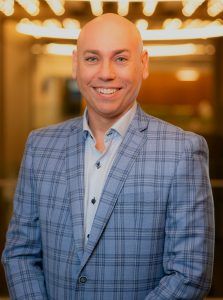
Sébastien SIMARD, M.Ps., Ph.D is a clinical psychologist and associate professor in the Department of Health Sciences at the Université du Québec à Chicoutimi (UQAC) in Quebec, Canada. Specializing in health psychology and cognitive-behavioral intervention, he has worked for over 20 years with people living with chronic illnesses, such as cancer, in palliative and end-of-life care. Committed to promoting a humane, interdisciplinary approach, he is particularly interested in the fear of disease recurrence/progression, psychological distress and interventions that promote adaptation to illness. His research has been widely published and has contributed to the development of the discipline of psychosocial oncology. He is a researcher at the Centre intersectoriel en santé durable (UQAC), the Centre de recherche et d'innovation Saguenay-Lac-St-Jean and a member of the Réseau québécois de recherche en soins palliatifs et de fin de vie (RQSPAL).
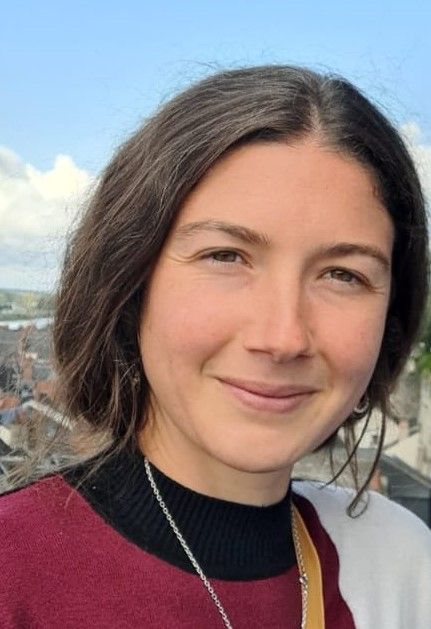
Maya CORMAN is a doctor of health psychology and psychologist. She has mainly worked in hospitals and taught various fields of psychology to students in psychology, speech therapy, orthoptics and occupational therapy at the Université Clermont Auvergne (UCA). She currently works as a freelance psychologist in partnership with the EIPAS association, which helps people suffering at work by offering support, analysis of professional practices, discussion groups and training, particularly in relation to vicarious trauma and cancer in the workplace. Her research interests focus on well-being and resilience factors in stressful situations (e.g. chronic illness). Her current research focuses on palliative and end-of-life care, with an intercultural dimension. Her practice of psycho-corporal and artistic techniques (mindfulness meditation, martial arts, dance, music) enables her to mature "action research" projects to improve support for individuals/groups in situations of mental and/or physical suffering.
Qualitative study of refusals of medical aid in dying: between suffering, despair and hope
Qualitative study of refusals of medical aid in dying: between suffering, despair and hope
Alexandra BEAUDIN
Interdisciplinary School of Health Sciences, University of Ottawa
Medical aid in dying (MAID) occupies an increasing place in end-of-life trajectories in Quebec. Yet some requests are refused, which can exacerbate suffering when no structured accompaniment is provided, leaving patients and professionals in a vulnerable situation. The aim of this study is to understand the evolution of suffering surrounding a refusal of MA. It compares the suffering experienced before and after the request, while integrating the perspective of competent professionals on these situations.
An interpretative descriptive qualitative study was carried out based on 20 semi-structured interviews: eight with people who had experienced a MA refusal and twelve with competent professionals who had been involved in such a situation. The data were analyzed inductively from a relational ethics perspective. The suffering experienced before the request for MA was already multidimensional, combining despair, fatigue, suicidal ideation, chronic pain, functional or sensory loss, isolation and a sense of injustice. After the refusal, this suffering intensified, marked by a loss of hope, a breakdown of trust in the system, an experience of dehumanization and sometimes desperate gestures. For competent professionals, refusal was also a source of suffering associated with the fear of causing harm, the moral weight of announcing a refusal and the difficulty of reconciling strict legal criteria with recognition of suffering. WMA refusal does not suspend suffering, but transforms it into despair, relationship breakdown and feelings of abandonment.
Integrating the point of view of competent professionals reveals that these sufferings are shared, albeit experienced differently. These people see their dignity compromised, while competent professionals fear harming them by complying with the law. These findings call for a rethink of post-refusal support by developing sensitive practices, psychosocial resources and spaces for interprofessional dialogue.
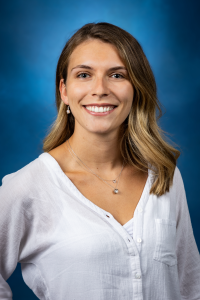
With bachelor's and master's degrees in psychology, Alexandra BEAUDIN is a doctoral student in population health at the University of Ottawa, under the supervision of Professor Isabelle MARCOUX. She is also research coordinator for the Interdisciplinary Research Consortium on Medical Aid in Dying (CIRAMM). Her doctoral project focuses on refused requests for medical aid in dying, a field in which suffering plays a central role. Her path is guided by the desire to better understand and recognize this suffering in order to contribute to more humane and sensitive care practices.