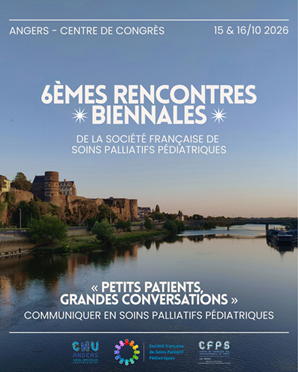

6th pediatric palliative care meeting
Congress co-organized by the Société française de soins palliatifs pédiatriques (2SPP) and the Centre hospitalier universitaire (CHU) d'Angers.
If communication has become a cornerstone of the skills expected of healthcare professionals in recent years, it's because it promises to keep patients involved in their journey and benefit from a better quality of care.
In pediatric palliative care, it is an essential tool of the discipline.But why is the attention paid to what might seem a simple modality so important? What is at stake? What is it about the proximity of death, which is essentially incommunicable, that makes communication in pediatric palliative care so special? Between dialogue with parents and medical information, between children who don't speak and adolescents who sometimes express themselves loudly, between moments of solitude for professionals and multidisciplinary team meetings, we'll reflect on why and how this tool becomes a practice, an ethical practice. We'll look at the specificities it generates, depending on the place of care: home, hospital, medico-social establishment, etc. We'll look at the time it takes, the dynamic process it engages, the creativity it enables. We will question the biases that shape the way we communicate. We'll be questioning the relentlessness of our caregivers to "talk the talk", echoing the limits of scientific discourse. For while communication is essential to quality pediatric palliative care, it cannot claim to reduce suffering, or that of its sometimes violent manifestations,in the face of a child's impending death.
Find out more:
Download the pre-programme
https://www.2spp.fr/6emes-rencontres-de-soins-palliatifs-pediatriques.php
Angers