
The desire to die among the elderly
Lassitude of living, requests for euthanasia, suicide... The desire to die expressed by some elderly people raises questions. The place given to them in our society is no stranger to this phenomenon, as philosopher Eric Fourneret and sociologist Frédéric Balard explain in a joint interview.
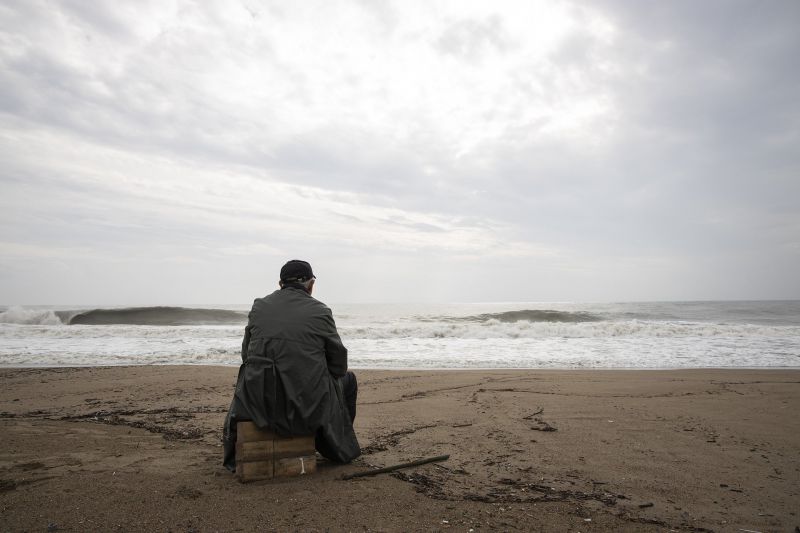
Frédéric BALARD is a lecturer in sociology and anthropology at the University of Lorraine and a researcher at the Laboratoire lorrain de sciences sociales (2L2S). He is currently working with sociologists and psychologists on a study of suicide in old age. He is also editor-in-chief of the journal Gérontologie et société.
View Frédéric Balard's profile on the Plateforme website
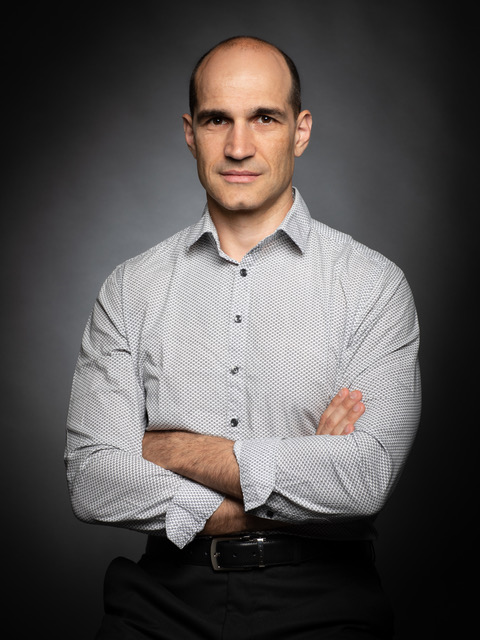
Eric FOURNERET, philosopher, made euthanasia and assisted suicide the subject of his thesis. A researcher at Grenoble Alpes University's Brain Tech Lab and the Sorbonne's Institut des Sciences juridiques et philosophique, he has contributed to various ethics committees. He was also a member of the SICARD1 commission. He is the author of the book Sommes-nous libres de vouloir mourir? published in August 2018 by Albin Michel.
View Éric Fourneret's profile on the Platform website
- What is the death wish in the elderly?
Frédéric Balard: Behind this expression - which is not a matter for sociology - lie very different realities: the proximity of death, discourse on death, the expectation of death and the fact of projecting oneself into death, taking steps to prepare for it... It seems important to me not to lump together accounts of death taken as generalities, those about the death of others and those about one's own death. As part of my thesis, I was interested in the very elderly, i.e. people aged between 90 and 100, for whom talk of death was very common. I often heard things like: "I'm waiting to die"; "at my age, it's normal to die", "I'm tired of living", "I've seen all my family die", etc. These accounts are not synonymous with death. These stories are not synonymous.
Eric Fourneret: There's a big difference between wanting to die and no longer wanting to make any effort to live, which is what some elderly people express when they say they're "waiting to die": they're tired, everything is difficult for them, they no longer feel pleasure in the little things of everyday life, and they withdraw. Many elderly people in institutions can express this kind of thing1. And paradoxically, explicit requests for euthanasia and assisted suicide are rare, perhaps because those who make them are afraid of not being heard well enough. That said, the desire to die can also manifest itself in non-verbal ways: some people refuse to eat or take their medication. But, let's repeat: wishing to die and being tired of the effort of living are two different realities that are apprehended in different ways.
- What do you think are the factors involved in the elderly's desire to die?
FB: I don't know if there's more of a desire to die among the elderly than at other periods of life. We also hear young people say they're "fed up with living". However, older people's relationship with death is shaped by their socio-cultural context. The desire to die may be motivated by the wish to no longer be a burden on the group. In certain societies facing very difficult living conditions, such as the Inuit, we have seen behavior aimed at hastening the death of dependent elderly people (abandonment, neglect, euthanasia). In today's society, talk of waiting for the elderly to die could be linked to not finding a social role, a place.
EF: These factors are, on the one hand, unwanted loneliness and isolation, and, on the other, the fact that these individuals no longer feel useful and see themselves as an economic and time-consuming burden on their children. These are people who are aware of what they cost society. Because, yes, caring for the elderly does take time, and it comes at a price. From an ethical point of view, we might ask whether this is a legitimate argument for society to justify limiting this care... In any case, reduced to the prism of utility, the elderly feel as if they no longer serve any purpose. They lose their existential anchoring: the feeling of existing, of being present in the world of others. We need to be aware that this is a collective social representation in which the individual - and not just the elderly individual - is apprehended according to an instrumental vision of reality. And this representation becomes all the more ferocious as people's vulnerability increases: the more vulnerable you are, the more dependent you are on others; the more dependent you are, the more it costs. In our culture, we remain convinced that we must return the help we are given, which is far from always being possible.
- In this case, how do we interpret requests for euthanasia?
EF: It's difficult to determine when a person wishes to die "on their own" and not because they feel compelled to do so for emotional, family or economic reasons. To estimate whether this is a rational wish to die ("rational" is not to be understood solely in its logical, mathematical dimension, but rather "that which has reasons for being", even if these reasons are emotional), this wish must have been able to pass its own examination, by spotting the arguments, testing them, putting them to the test and confronting them with contradiction... In the state of Oregon, in the USA, assisted suicide is authorized, but it represents only 0.2% of deaths, compared with 3% in Belgium or the Netherlands... Why? Perhaps because in these two countries, the date of death is fixed in the procedure, whereas in Oregon no date is fixed. This means that individuals can constantly re-examine their request to die, which often results in a desire to postpone the deadline. A fixed date seems to freeze the will by inscribing it in a determinism that is contradictory to the idea of a free will.
- Is suicide common among the elderly?
FB: The suicide rate among men over 85 is almost ten times higher than the national average2. It's a low-profile phenomenon, compared to youth suicide or suicide in the workplace, but it's nothing new: Durkheim was already describing it over a century ago. This raises a number of questions: why does suicide increase with age? Why is there such a difference between the sexes, with older men committing suicide 8 times more often than women, and women making more attempts? But when we look at the causes and motives for suicide, we quickly come up against methodological limitations. When we survey the families of suicide victims, we are in fact gathering the views of spouses, close relations and often descendants, which can differ greatly from one individual to the next. What's more, we don't look for the same thing depending on our specialty: epidemiologists will analyze risk factors, sociologists will look for causes (isolation, loss of social ties, precariousness), while psychologists will focus on pathologies (depression, mental disorders...) or individual motives (suffering, shocks, ruptures in the life course).
- Is it a question of isolation? Are elderly people who commit suicide depressed?
FB: We have to be wary of hasty interpretations: we also observe cases of suicide among people who live as a couple or with their children. As for depression, it's difficult to assess in the very elderly: its occurrence varies between 25% and 80% according to studies. It's not easy to distinguish between depression, sadness and severe depression. Not to mention that, from the point of view of our social norms, the very elderly often have reason to be unhappy because they are widowed, suffer from disabling pathologies and often see their freedom and decision-making autonomy reduced.
- Is living in an institution for the elderly an aggravating factor?
EF: It's obvious that there's a destabilization and loss of bearings associated with institutionalization. It can be experienced as a real trauma. Many people enter an institution because their state of health deteriorates significantly, increasing their dependence on others. At that point, life expectancy in an institution is not very high. I've had the opportunity to work in a number of retirement homes, and I have to admit that there's not one in which I would have wanted to end my days. But that's not the responsibility of the directors or the carers, it's because of the insufficient resources that politicians deign to grant them. In the medical world, it's often said that the obligation is not results, but means. This is morally unacceptable and can only lead to complex and extreme situations, in which the elderly resident, the professional and society all suffer. In the Nordic countries, most elderly people are not enrolled in specialized institutions, as the network of associations is much more developed than in France, for example. This means they can remain at home for longer. What's more, there is a more pronounced cohabitation between working people and senior citizens, and this starts with urban planning, which does not physically separate the generations. The place of the elderly in society is completely different. This raises many questions about the French model and its imperatives of profitability.
- In 2012, French President François Hollande brought together eight specialists around Didier Sicard, former president of the French National Ethics Committee, to reflect on the end of life, organize public debates and draw up a report on the subject. https://solidarites-sante.gouv.fr/archives/archives-presse/archives-com...
- There are 60 cases per 100,000 people among elderly men, compared with 18 per 100,000 for all ages combined.
Published July 26, 2020
Éric Fourneret
Photo credit: Pix'l Studio