

Feedback from a year of research
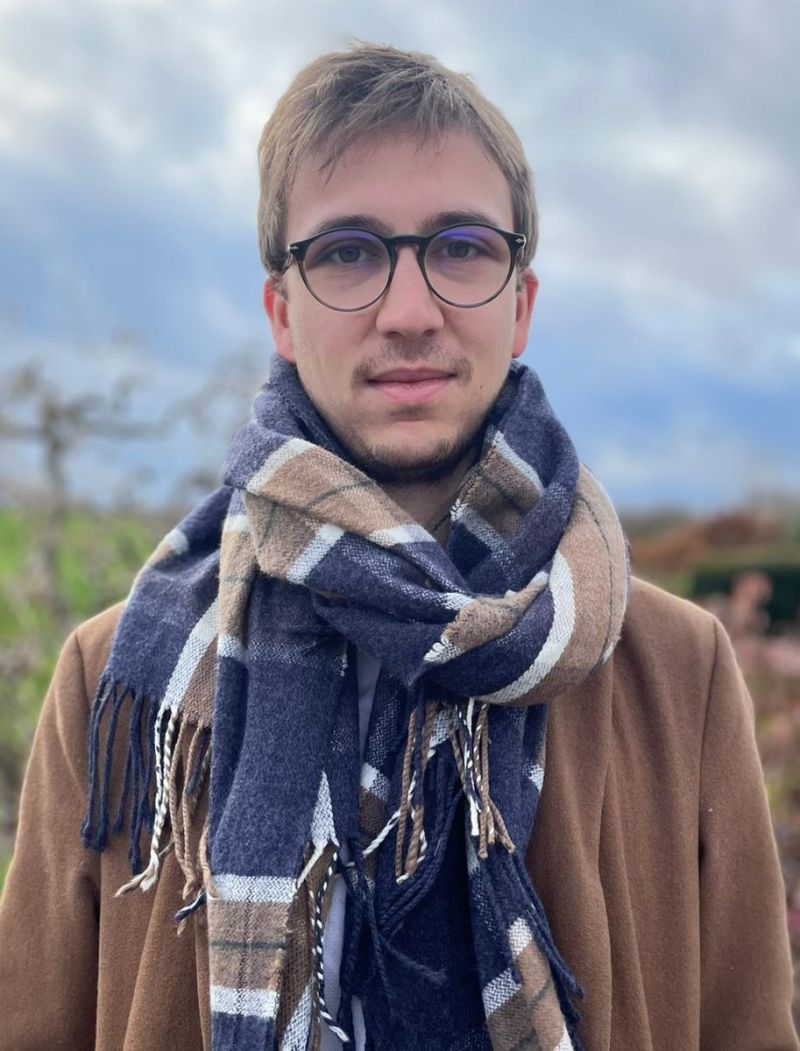
Loic Bauschert, currently a hematology intern, is aiming for a career in palliative care. In 2022-2023, he has received funding to follow a research training course as part of the national plan for the development of palliative care and end-of-life support. Interview.
- What is the "research year" scheme and why did you want to benefit from it?
This funding issued by universities allows students to stop practicing for a year to undergo research training while receiving a salary1. Most of the time, this is for the second year of a master's degree, but it can also be for a year's thesis. For me, this gap period devoted to research was an obvious choice, as I've been aiming for an academic career since the start of my internship.
- Is this a necessity for doctors who want to go into research?
In hematology, participation in clinical research protocols is an integral part of practice. But to do basic research, or to work on issues that fall within the humanities and social sciences, it's essential to go through a master's degree or a science thesis.
- How to apply?
First and foremost, you need to be accepted into a course. For my part, I had been selected for the End-of-Life and Palliative Medicine master's program at Université Paris-Est Créteil Val de Marne, but this ultimately did not open at the start of the 2022 academic year, which is why I ended up taking the Medical Ethics master's program at Université Paris Cité. The application is examined by the university, which allocates funding. You need to submit a written and referenced research project, as well as a letter of recommendation. Preparing this file requires a little time and investment.
- What was your research topic, and why did you choose it?
My medical training combines hematology and palliative care. This dual perspective has led me to question the lived experience of patients with hematological malignancies and their caregivers in the context of end-of-life support. As the trajectory of these diseases unfolds over a long period of time, I wanted to question the professional representations of the term "chronic disease" among hematologists, as well as the way in which they mobilize this vocabulary of chronicity during their consultations.
- Concretely, how did this year devoted to research unfold?
The master's degree includes many theoretical teaching units that I attended. The rest of the time, I carried out my research work while affiliated to the Ethics laboratory at the Catholic University of Lille. The first few months were devoted to theoretical reflection and problematization. Then, with the help of the two people who supervised my work, I drew up the research methodology and protocol. I chose a qualitative methodology, with participant observation and semi-structured interviews, which I conducted in the field between February and April. I then devoted myself to data processing. Finally, I defended my dissertation in June.
- What did you gain from this research training?
The theoretical side of the training enabled me to take a step back and develop a very reflective view of my practice. I had time to ask myself questions that I wouldn't have considered in any other context. I was also able to immerse myself in the world of research while being supported by competent people. Indeed, the qualitative methodology I wanted to use is very uncommon in medicine, and it was very useful to have to deal with referent people who mastered it well.
- What difficulties did you encounter?
I come from the world of hematology, where we do a lot of biology, in a very guided way. I was a little bewildered when I discovered that in research in the human sciences, there's a whole aspect of problematization that takes place in a very personal way. There were times when I felt a little lost, wondering how I was going to make progress on a subject in which I was by no means an expert, but I was able to call on my supervisors.
- Do you plan to continue with a science thesis?
It's a motivating prospect, but one that requires a great deal of personal investment. I haven't made up my mind yet. I know the opportunity is open to me within the teams I've worked with, but it's going to depend on my future position (a full-time one in palliative care) and how things go in the near future.
Published May 6, 2024
- This salary corresponds to that of a second-year intern