
Thinking spaces of death
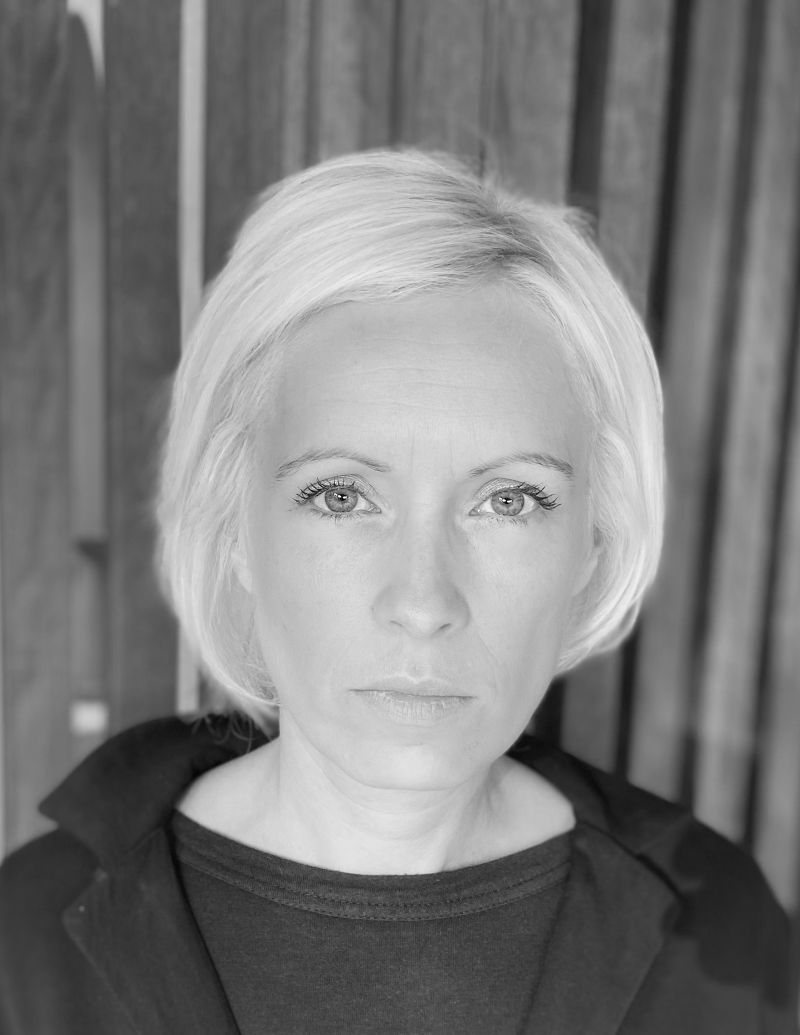
Interview with Annabelle ISZATT, practicing architect, teacher at the Montpellier School of Architecture and researcher at the GERPHAU laboratory. She has been conducting research into funerary spaces for over 10 years. Her work has led to the creation of both a thematic research network and an action research project.
- How did you get started with the research?
I did my thesis in Switzerland, in the architecture department of the École polytechnique fédérale de Lausanne (EPFL), because at the time you couldn't prepare a doctorate in a school of architecture in France. My subject was the birth of necropolises in the Paris region. I sought to understand the mutations of society, in a period of upheaval, by observing the emergence of new spaces of death.
- What is the research methodology in architecture?
As this is a relatively new field of research, there is currently no methodological consensus. During my thesis, I worked from archives (architects' or urban planners' plans, legal and administrative texts). In my later work, I developed a more anthropological approach. In particular, I do "shadowing", i.e. I observe how people behave in a given space: how they move, what they do, at what times, whether they bring something, whether they interact with each other... This observation from a distance enables me to identify routes, and areas that attract, concentrate or, on the contrary, are avoided. Even as a practitioner, I always take a sociological and anthropological look at the users of the places I design. Generally speaking, I find the transdisciplinary approach necessary and extremely enriching.
- Why are you interested in death and funeral spaces as an architect?
Previously, death spaces were not addressed at all in architecture curricula, even from a historical angle, despite the fact that renowned architects have worked in this field. It's an important subject that shouldn't be ignored. To remedy this shortcoming, I initiated a course on sacrality at the Montpellier School of Architecture, covering not only all aspects of religious and cult spaces, but also places of death, whatever they may be. Subsequently, I decided to organize a symposium on this subject, bringing together all the disciplines concerned with man and space. This colloquium, entitled "sacralities, spatialities" was held in May 2022.
- What is the outcome of this colloquium?
We succeeded in bringing together people from very different backgrounds and from several countries. Architects, urban planners, researchers in the humanities and social sciences, lawyers, doctoral students in architecture, journalists and even an ethnographic photographer. It was a great success, in the sense that everyone made an effort to avoid using too much jargon so as to be able to really exchange ideas. At the end of the two days, it was clear to everyone that there was a real value in talking to each other. We realized that although we didn't have the same words or the same methods, we were all saying more or less the same thing.
- What were these common elements?
We tried to define what was the expression of the sacred in space. Even outside religious codes, there are universal spatial devices that cross history and cultures. The sacred dimension is often accompanied by the same threads: we find a relationship with great horizontal lines, vast landscapes, which are universal elements of detachment, but also the spatiality of passage with thresholds, passages. We need the notion of borders and limits, we need the space of death to mark something.
- What are your research projects?
I plan to repeat this colloquium every two years and make it itinerant. The idea is also to set up a small "spatiality/sacrality" thematic research network. In addition, after ten years of theoretical research, I wanted to put the results of this work into practice and get involved in a research-action project that I'm running through my agency, to experiment with a new model of funerary space.
I'm planning to hold a symposium every two years, and make it itinerant
- Can you tell us more about this project?
The SanctuR project was born as part of an international call for projects in Shanghai, where we won 3rd place with our innovation proposal for the cemetery of tomorrow. This rite-based project brings together all the spaces of the funeral journey in a single urban room. I defend the idea that this route should no longer be fragmented across the territory as it is today. Having to move from the hospital, to the funeral home, to the place of ceremony, to the crematorium... is not conducive to contemplation, it creates ruptures in the emotional state of this particular moment. What's more, spaces where death occurs are often located outside cities, and are therefore invisible. SanctuR is a local project, almost a neighborhood project, which could have other functions and become a place where the living come to recharge their batteries and extract themselves from urban effervescence.
For more information:
Consult the profile of Annabelle ISZATT in the researchers directory
Contact: annabelle.iszatt@montpellier.archi.fr
Sacralités Spatialités network website: https://sacralitespatialite.com/
SanctuR project: https://zattnsat.fr/portfolio/concours-cimetiere-a-shanghai-circle-of-l...
Published 6/06/2023