

What if natural death became predictable?
Recent work in the biology of aging has identified markers that predict natural death in certain animal species. This research opens the way to possible extrapolation to humans, raising thorny ethical questions..

Sometimes, scientific progress allows far-flung disciplines to meet. That's what happened when Michael RERA, aging biologist1, wondered about the possible impact of his work and felt the need to knock on the door of a philosophy laboratory.
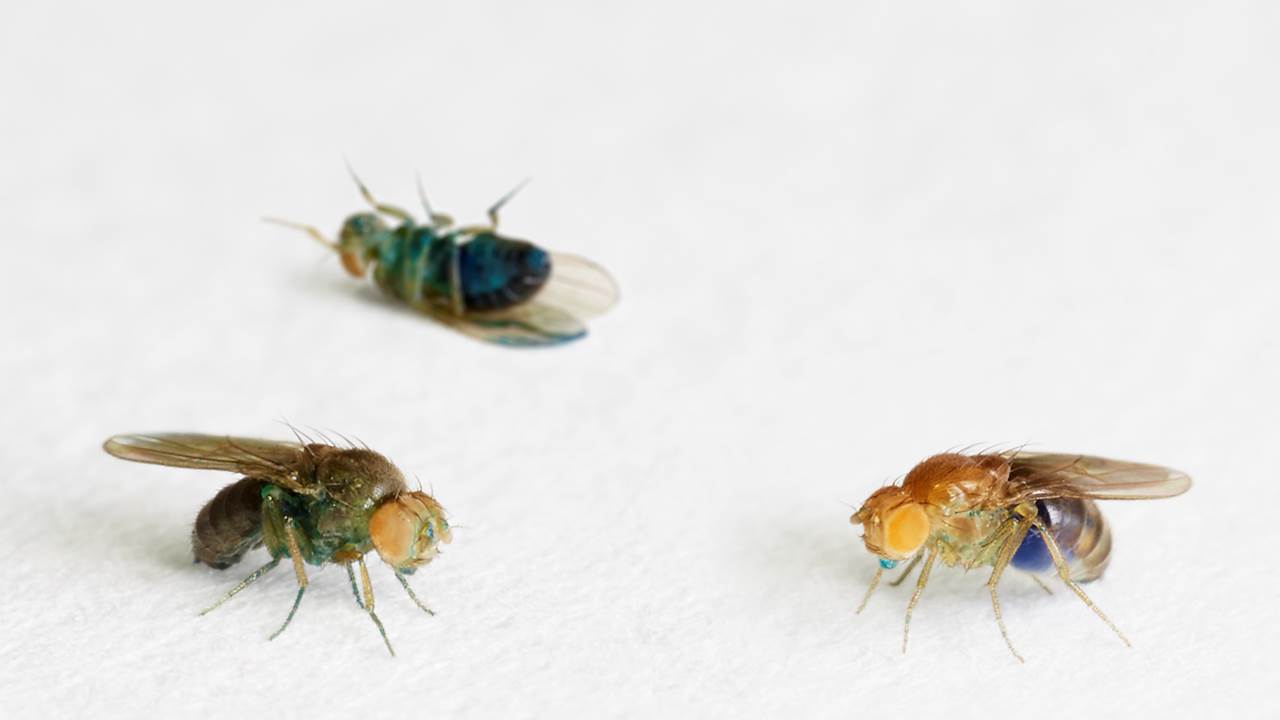
This researcher and his team have been working for many years on various indicators of physiological decline in Drosophila (a species of fly commonly used as an animal model in research). Signs of aging include, for example, increased inflammation markers, or a decline in locomotor activity with age. Using a simple test based on the ingestion of a non-toxic food dye, Michael RERA has shown that as flies age, they all go through a phase in which their intestines become permeable2, and that once they have passed this stage, their life expectancy is reduced to around three and a half days. The team then extended this work to other species: another variety of Drosophila, the nematode and the zebrafish, with similar results... So it seems that this measure of intestinal permeability may be, at least in some animals, a predictive marker for the onset of natural death - or entry into the "terminal" phase of aging. Work on mice is currently underway... And what if the same were true for humans?
The fly and the philosopher
Dsince 2014 we've seen many articles flourishing in the scientific literature interested in predicting the occurrence of natural death in humans... When considering the implications of this kind of discovery, it's essential to ask questions from an ethical point of view, even before industrial or economic applications appear
, warns the researcher. What if we were to see tests marketed to detect that famous "milestone" beyond which natural death would occur after seven and a half years (that's the figure given by current extrapolations)? And what if insurance companies took advantage of this information to set the amount and duration of their premiums?
According to Marie GAILLE, a philosopher at the SPHERE3 laboratory and a specialist in end-of-life issues, This is not science fiction, these are questions that can arise in a relatively restricted timeframe and that may have consequences not only in the clinic but also on a social scale, for healthcare policies or in the insurance world
. Aware of these issues, the biologist and the philosopher decided to collaborate. They set up a multi-disciplinary working group that met several times, and together wrote a scientific article to share their thoughts within the research community.
There's a difference between predicting and anticipating death. Everyone knows they're going to die, but they don't know when or how, which leaves the horizon open
, Marie GAILLE points out. While it is generally assumed that human beings prefer not to know when they will die, the reality is more nuanced. Indeed, middle-aged individuals often prefer to remain in the dark, but we find people who declare that they want to know when they'll die among the young - because it seems so far away - and on the contrary among the very old, who see in this opportunity the chance to get organized.
To grasp the perspective opened up by Michael RERA's research, we can think by analogy and draw a parallel with the current possibility of predicting the risk of the onset of certain serious illnesses through genetic analysis
, resumes Marie GAILLE. Studies4 were carried out on people who had shown interest in the test to determine their risk of developing Huntington's disease. Many of those who had initially wanted to take the test did not go through with it. Those who did pursue it and discovered they were predisposed to the condition suddenly found their lives closed in on themselves, and felt deprived of an open future. Is this situation ethically satisfactory? Can we learn to live with such knowledge?
Rather than providing a clear-cut answer to these questions, the philosopher and biologist highlight the need for further investigation, in order to ask the right questions in good time.
- Laboratoire Adaptation biologique et vieillissement. UMR 8256-CNRS /Paris Sorbonne université.
- The dye that should not be absorbed by the intestine gives, when this organ becomes permeable, a blue color to individuals.
- SPHERE - UMR 7219 - CNRS / Université Paris Diderot.
- Gargiulo, M. & Salvador, M. Vivre avec une maladie génétique (A. Michel, 2009) / Clément, S., Gargiulo, M., Feingold, J. & Durr, A. Guidelines for presymptomatic testing for Huntington's disease: Past, present and future in France. Rev. Neurol. (Paris) 171 , 572-580 (2015) / Novas, C. & Rose, N. Genetic risk and the birth of the somatic individual. Econ. Soc. 29 , 485-513 (2000) / Robins Wahlin, T.-B. To know or not to know: A review of behaviour and suicidal ideation in preclinical Huntington's disease. Patient Educ. Couns. 6 5 , 279-287 (2007).
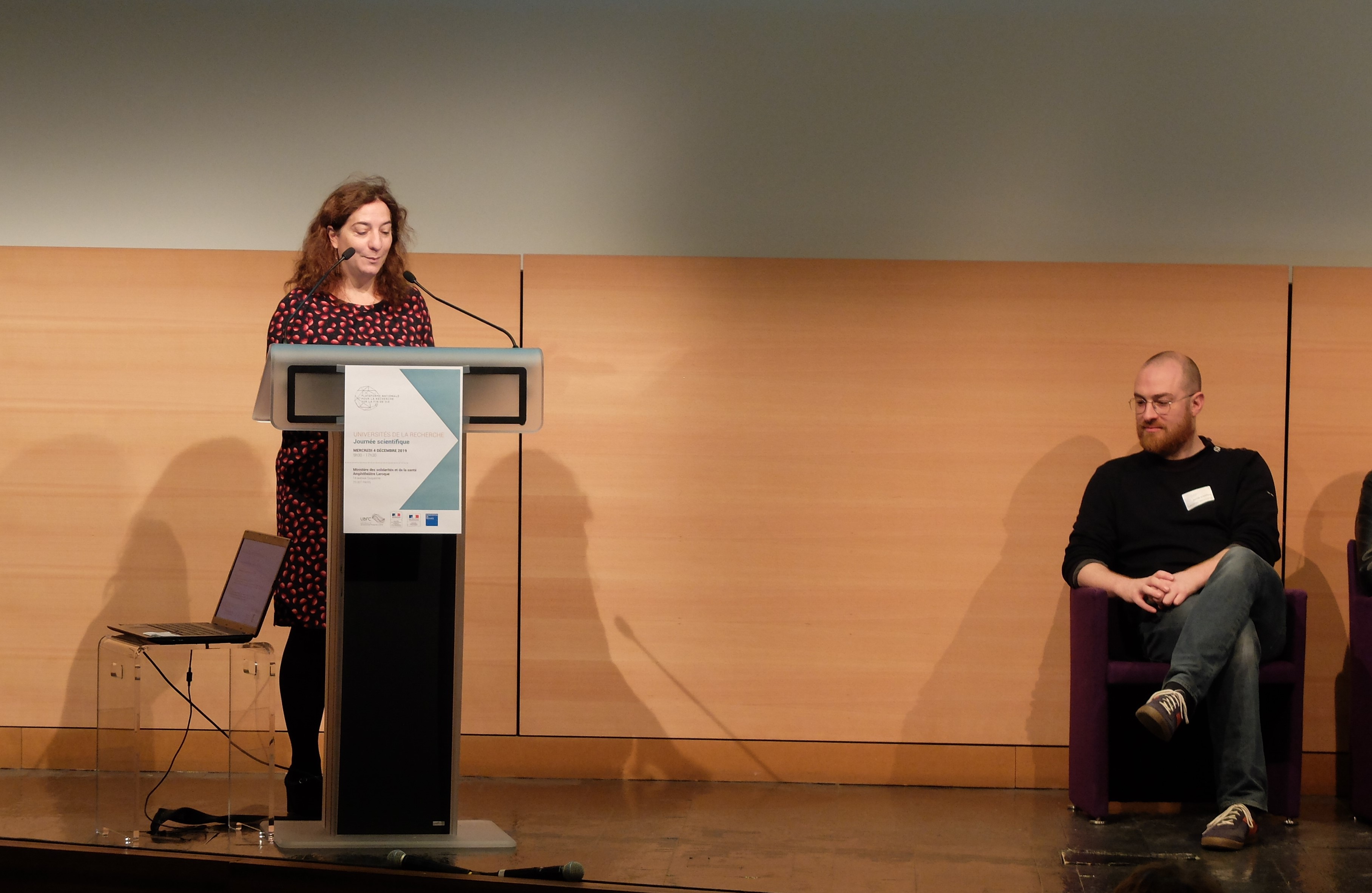
This work was presented during the 2019 Scientific Day of the National Platform for End-of-Life Research.
Published December 16, 2019
Author : Delphine GOSSET