
Beings and their remains
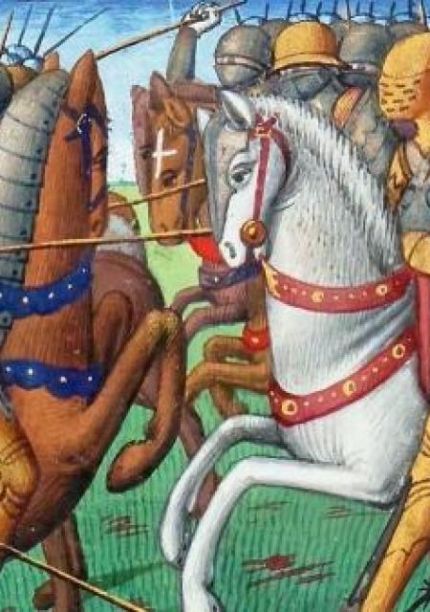
What do we know, in particular, about the fate of the bodies of the perhaps 1,000 Englishmen who died there? Where and how did they die? What was the battlefield? Were the bodies given space to lie down and die? And, consequently, what became of them? Where are the bodies?
This questioning is common to all sequences of collective death, violent or otherwise. How do we die? What do we do with "our" dead, or with "theirs"?
This question is common to all sequences of collective death, violent or otherwise
The manner of dying, of death on the battlefield, be it ancient, medieval, modern or contemporary, forms the core of the investigation. The confrontation of plural approaches, historical, archaeo-anthropological, literary, will renew the look at this essential question in the study of war.
The way of dying, of death on the battlefield, whether ancient, medieval, modern or contemporary, is the heart of the investigation
What place do the remains of our dead occupy in our public spaces, in cemeteries, places of worship or museums, in collective memories, in literary sources, in political issues?
Researchers are invited to ask questions about burials, granted or refused, about bodies abandoned, tossed by the waves, about the anonymous, the disappeared mourned.
At a time of epidemics, when bodies donated to research are mishandled in the morgue, when soldiers fallen at the front are repatriated, this international symposium will look at what happens to bodies after the ultimate threshold has been crossed. But it is also and a history of the living, a history of beliefs, a history of violence, a history of fear and hope, starting from what remains of beings, what continues to be.
For more information:
https://recherche.uco.fr/actualites/5778/les-etres-et-leurs-restes-baug…
Baugé en Anjou