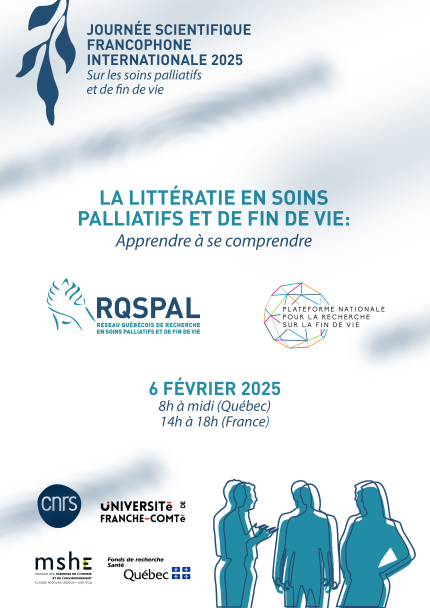

Literacy in palliative and end-of-life care: learning to understand each other
There are many myths and false beliefs about palliative and end-of-life care (PELC), such as that it's only about symptom management, or that it's reserved exclusively for the dying and not suitable for children.
It is therefore essential to demystify them, keep stakeholders informed and enable the acquisition of skills among the population, patients and their loved ones, as well as caregivers, so that they are able to understand, evaluate and use health information about the different trajectories of care, dying and death.
This approach gives meaning to this information, enabling its appropriation and empowerment as well as the development of self-management skills at this final period of life.
Sometimes, however, key healthcare players encounter challenges in meeting these people's informational and semantic or symbolic needs, as well as taking into account their emotional and experiential aspects.
Considering the need to ensure accurate and appropriate information sharing, but also an ability to question and understand wishes, it is essential to take into account various barriers such as age, cognitive abilities, socio-cultural context as well as stage of illness.
In this sense, literacy1 in palliative care is a concept to be taken into account.
Objectives:
- Share research experience and new knowledge on issues related to the literacy of people in hospice palliative care, their loved ones, caregivers and the population;
- Identify and understand literacy challenges in PEOLC;
- Explore avenues of solution for better literacy in PEOLC;
- Determine future research directions on the topic of literacy and information needs in PEOLC.
- Sørenson et al. (2012) present health literacy as "the knowledge, skills, motivation and ability to locate, understand, evaluate and use health information when making decisions in health care, disease prevention and health promotion contexts to maintain or improve quality of life."
En ligne