
Life storytelling: a new kind of care
Valéria Milewski is a pioneer of hospital biography. She invites seriously ill patients to write about themselves in a book that they leave to their loved ones. As research has shown, this approach helps them to come to terms with the end of their lives.
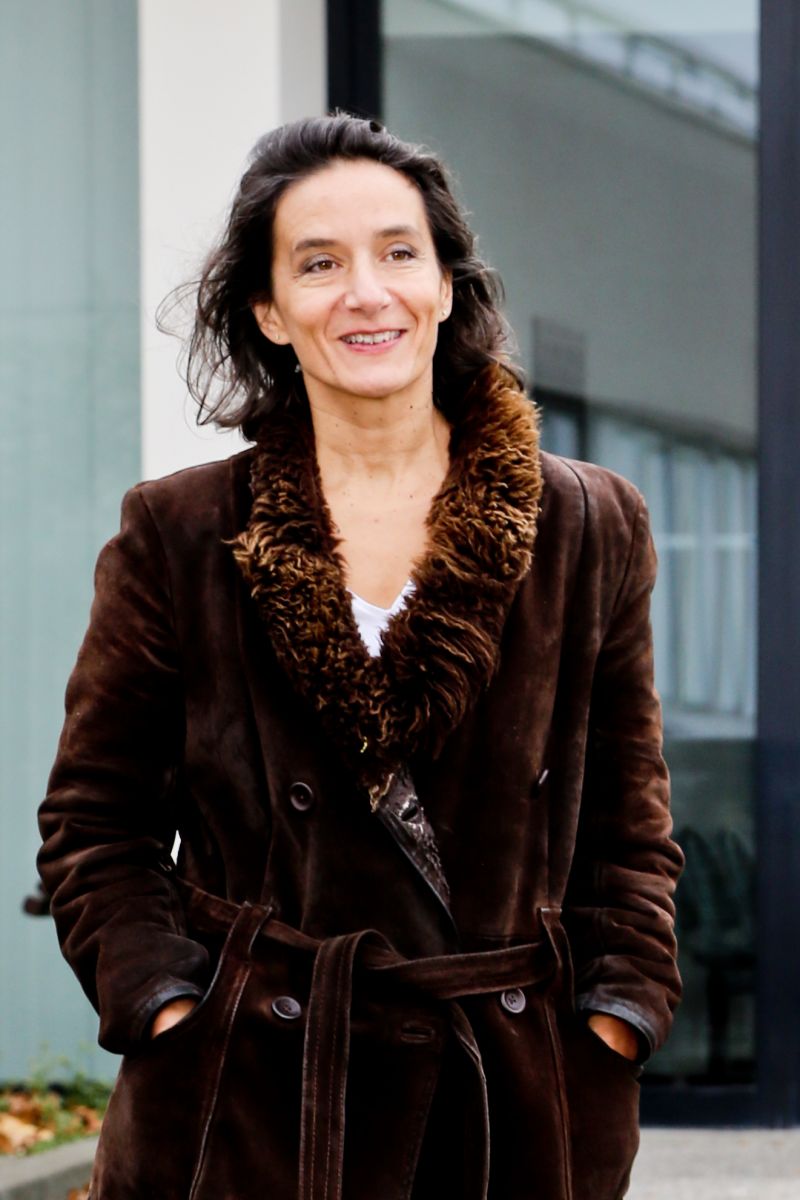
After studying literature, Valéria Milewski accumulated professional experience in the event, theater and museum sectors. She loves meeting people, listening to ordinary stories and, above all, writing. One day, an original idea germinated in her mind: to offer people in palliative care the chance to write the book of their lives. The idea never left her mind, but before taking the plunge, she decided to put it to the test. First, she had it validated by a psychologist, to ensure that her approach was harmless. Then she became a support volunteer in a palliative care unit. Finally, to confront herself with the exercise of writing, she set up her own business and produced several private and family biographies. She met each of these prerequisites without encountering any pitfalls. In 2007, a meeting with a palliative care doctor gave her the opportunity to put her idea into practice in the onco-hematology department of the Chartres hospital. There, she developed her method in consultation with the nursing team. It was the start of a collaboration that continues to this day.
Transcribing the melody of the other
Some patients in this department are offered the chance to recount their lives in a beautifully crafted book, which will be entrusted to the loved ones of their choice. The process is confidential, free of charge, and they can interrupt it at any time. If they are interested, Valéria Milewski meets them for a series of interviews. The process is in no way mortifying, since the disease is barely mentioned in the content. On the contrary, it allows you, in a way, to be seriously ill and still have your life ahead of you
, she suggests. When writing, she uses their words, their turns of phrase, their expressions, simply giving the text a backbone so that it gains in readability. It's the work of a translator, getting as close as possible to the melody of the other
. And the process works, since relatives who discover the book declare: when I read it, he (or she) is there!
.
An approach validated by research
The approach is clearly having beneficial effects. To objectify these positive results, the biographer and the hospital team embarked on a research project. Between 2013 and 2017, they conducted a qualitative study at the CHU de Chartes with patients, their relatives and caregivers1. The survey results show that for people at the end of life, the process is clearly therapeutic. They feel more soothed, experience less pain, say they are "holding on to finish", passing on "their truth". For me, hospital biography is like a massage, a massage of the heart and consciousness
, testifies one patient. The important thing is the process
, Valéria Milewski emphasizes, giving the example of this gentleman, who passed away just before starting his biography, but happy to have committed himself to the process.
For loved ones, receiving this book goes far beyond passing on the family memory. Since, as death approaches, "even the silent ones speak", families discover moments of life they didn't know about, or, conversely, are sometimes disappointed not to see certain secrets lifted. There are also unexpected repercussions, as in the case of a teenager who, discovering in this book the esteem and confidence his grandfather held in him, is able to break out of his situation of academic failure. Whatever the case may be, this support is a great help in the mourning process.
Finally, for paramedical teams, the book is a great help in the mourning process
Finally, for the paramedical teams, this is "support" care, while the medical teams see it as "spiritual" care. The approach also has beneficial effects on these teams in that it enables them to maintain cohesion, stay within the continuity of care and, ultimately, within a certain ethic of humanistic medicine.
"Carebiography"
Valéria Milewski has developed a taste for research and is starting a practitioner-researcher thesis2 on this subject. The subject could just as easily fall within the realms of anthropology, psychology or philosophy, but in the end it falls within the domain of language science. This thesis, which positions "carebiography", a new literary genre, as a new kind of care, is defended in December 2020.I really recommend anyone to experience multidisciplinary research, it's so rich and you gain in legitimacy
, she stresses.
A convinced and passionate pioneer, Valéria Milewski has spread her idea by creating a general interest association and training other biographers. These "passers-by", as they call themselves, are now present in 18 hospitals all over France. An inter-university diploma (DIU) is due to be created, and advocacy is underway to move towards recognition of a new profession and, above all, a new form of care.
- Title of this research: What are the impacts and specificities of hospital biography among 3 corpora: biographers, relatives and caregivers in onco-hematology in Chartres.
- Thesis title: Tenir parole et rendre parole, le genre de la biographie hospitalière ou de la " carebiographie ".
Contact:
Valéria Milewski
contact@passeur-de-mots.fr
https://passeur-de-mots.fr/
Published May 11, 2021
Author : Delphine Gosset