

Training in end-of-life research
Applications for the Master 2 Santé / Fins de vie et médecine palliative offered by Université Paris-Est Créteil Val de Marne are open until July 5, 2025. Kenza Bobst Lalanne, who is taking the course this year, gives us her impressions of this multidisciplinary training program, which is unique in France.
- Why did you take this master's degree?
Kenza Bobst Lalanne: I'm an intern in general medicine on Reunion Island. Palliative medicine had long interested me because it focuses on the patient's experience and that's what makes the most sense to me. What's more, after years of practicing medicine, I wanted to try my hand at something more theoretical. That's why I seized the opportunity to benefit from a dedicated grant1 and join this master's program, the aim of which is to teach students to conduct, and even supervise, research. For me, having just finished my studies after spending ten years in hospitals, it's an opportunity to train with people who are benchmark figures in the world of palliative care.
- What is taught there?
KBL : This master's degree offers a whole panoply of theoretical teaching on how scientific work is conducted, and on different methodologies. While all the content is related to palliative care, the lecturers don't all come from this field; there are public health professionals, philosophers, clinical psychologists... It's very diverse and we're really offered a global approach. I really appreciate knowing and understanding the basics of different methodologies that aren't necessarily the ones I use in my own work.
- Who are the teachers?
KBL: We are well supervised. There's a referent teaching team who regularly check in with us and in whom we sense a great willingness to question and reflect. The teachers are experts in their field. The lecturers are numerous, coming from very different backgrounds, both in their field of study, their training and their practice. They are very accessible. Classes are condensed to one week a month in Paris and one day a month in the second semester. Since we're based all over France, it's very convenient. We meet at the Maison Jeanne Ganier, which is a very pleasant venue. As there are so many people involved, it's really our group of students who hold us together. The students are in a way the central pivot and the teachers gravitate around them.
- Who are the students?
KBL: There are a dozen of us, with a wide variety of profiles and big differences in age: some are still doing their internship, others are doctors or department heads with a career behind them. We come from a variety of professional backgrounds (hospitals, general practitioners, specialists, oncologists, etc.) and geographical locations (Brest, Paris, Lyon, Strasbourg, Rennes). For the moment, there is no one from the humanities, but the teaching team would like to broaden recruitment. That would be a good thing: the courses are accessible even for someone who wouldn't come from a medical background, and I like the audience to be diverse.
- What are the strengths of this training course?
KBL: This master's degree includes time for a four- to six-month internship in a research laboratory. Previously I didn't know that there were any laboratories physically dedicated to this field! It enabled me to understand how researchers work in teams, which is very different from the research you can do on your own at your computer. It's a source of information, motivation and collective intelligence. It's a very strong asset. What's more, thanks to this master's degree, I was able to meet people who have academic careers, people who work in palliative care, and that made me aware of the reality in the field.
- These are the "Year of Research" grants distributed by the Regional Health Agencies (ARS)
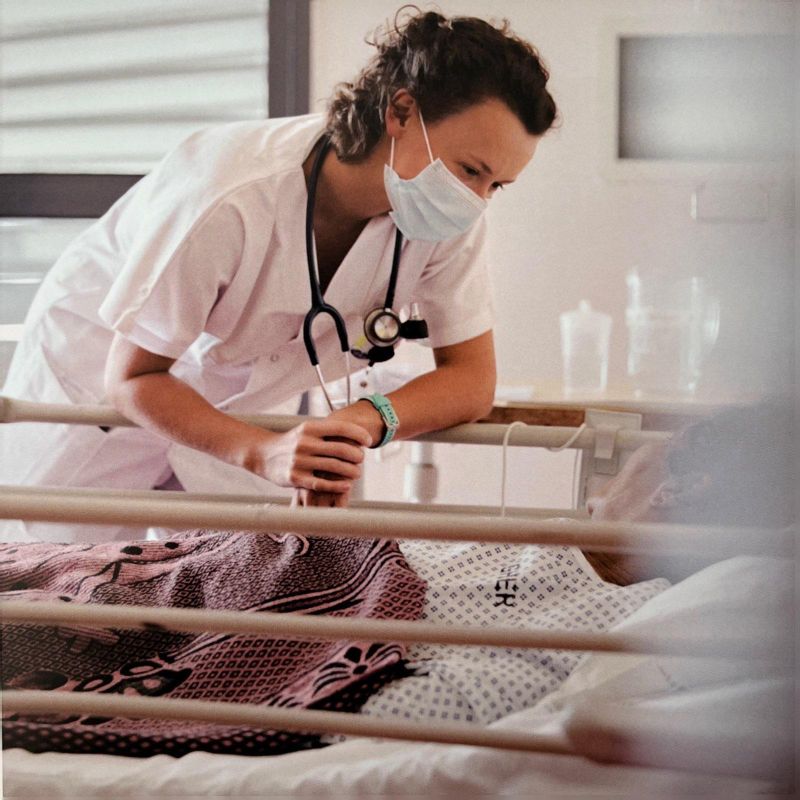
Photo credit: Franck Gélabert
The Master 2 research Health / end of life and palliative medicine
This course brings together experts in the fields of health and human and social sciences (SHS) who wish to train in research with a qualitative and quantitative methodological approach.
It provides skills in the design of research projects, the development and implementation of protocols, the analysis and communication of results, and an understanding of the regulatory aspects of research
This Master's degree is open to medical students (DESC or FST in palliative medicine), but also to students in the humanities and social sciences with a Master 1.
Admission through validation of professional and personal achievements is also possible.
Application deadline: July 5, 2025
For more information:
See the course description on the Université Paris-Est Créteil Val de Marne website
Read another article about this master's degree on our website
Published on 10/04/2025